Your cloud provider secures their infrastructure. Your third-party API vendors secure their endpoints. But the credentials your product holds, the tokens it stores, the dependency chain inside every connector you ship? That gap is yours to own. Here's a clear breakdown of what saas integration security actually covers and where most teams are leaving themselves exposed without realizing it.
TLDR:
- Most dependency vulnerabilities live in transitive packages, not in code your team wrote directly
- A stolen OAuth token bypasses MFA entirely: the Salesloft Drift breach hit 700+ orgs this way
- Integration security splits across 3 owners: your vendor owns the pipe, your team owns config, your customer owns their grants
- AI agents inherit broad OAuth scopes by default, turning a prompt injection into a full write session
- hotglue never stores customer data between syncs, supports tenant-scoped JWTs, and patches vulnerabilities in internal tools and dependencies the same day they are discovered
What SaaS Integration Security Actually Means
Integration security is a different surface from general SaaS security. It covers what happens the moment your product connects to a third-party system on behalf of a customer.
That connection creates attack vectors your cloud provider does not own and your third-party vendor does not fully control. The credentials your product holds to read from QuickBooks or write to Salesforce, the tokens customers grant during OAuth, the transformation scripts that touch live customer data mid-sync, the dependency chain underneath every connector you ship: all of that sits in a gap neither party fully claims.
For a CPO or Head of Partnerships, integration security failures tend to be invisible until they are catastrophic. A misconfigured scope, a token that never expires, a secret committed to a config file three sprints ago: none of these trip a firewall alert. They just sit there, available to anyone who looks in the right place.
The practical scope of what you are responsible for securing includes:
- Credentials and tokens your product stores or passes to third-party APIs
- The permission scopes you request during customer OAuth flows
- Dependencies and open-source packages inside your connector code
- Data in transit between your product and external systems
- Access controls governing which tenant data flows where
Third parties own their auth endpoints and API security. You own everything that happens on your side of that handshake.
The Six Integration Types and Their Risk Profiles
Each integration type carries a different risk profile, and knowing where accountability sits is half the battle.
| Integration Type | How It Works | Primary Security Exposure |
|---|---|---|
| Native integration | Your product ships the connector directly | Credential storage, dependency vulnerabilities, scope creep |
| iPaaS connector | Third-party vendor mediates the connection | Vendor breach radius, token sharing, data handling policies |
| Custom API integration | Your team builds directly against a third-party API | Secrets in code, no rotation enforcement, schema drift |
| OAuth third-party app | Customer grants consent to an external app | Token persistence, over-permissioned scopes, no revocation audit |
| Low-code/no-code automation | End users build workflows in tools like Zapier or Make | Shadow integrations, unmonitored credential grants, no security review |
| AI agent integration | An LLM or agent calls tools on behalf of a user | Over-permissioned tool access, prompt injection risk, audit gaps |
Native and custom API integrations put the security burden squarely on your engineering team. iPaaS connectors shift some of that to your vendor, which is only useful if you've verified what that vendor actually does with credentials and data in transit. OAuth third-party apps and low-code automations are the category most teams underestimate: customers grant those tokens themselves, often without IT visibility, and they persist indefinitely unless someone actively revokes them.
AI agent integrations are the newest exposure, and what MCP means for SaaS integrations is still settling in for most teams. When an agent holds a live OAuth token to act on a user's behalf, the blast radius of a prompt injection or misconfigured permission is a fully authenticated session, which is a much larger problem than a data leak alone.
Threat 1: Software Supply Chain and Dependency Vulnerabilities
Supply chain risk gets amplified in SaaS integration contexts in a way that's worth pausing on. When a vulnerability enters a connector dependency, it travels to every tenant using that connector. One compromised package, thousands of affected customers.
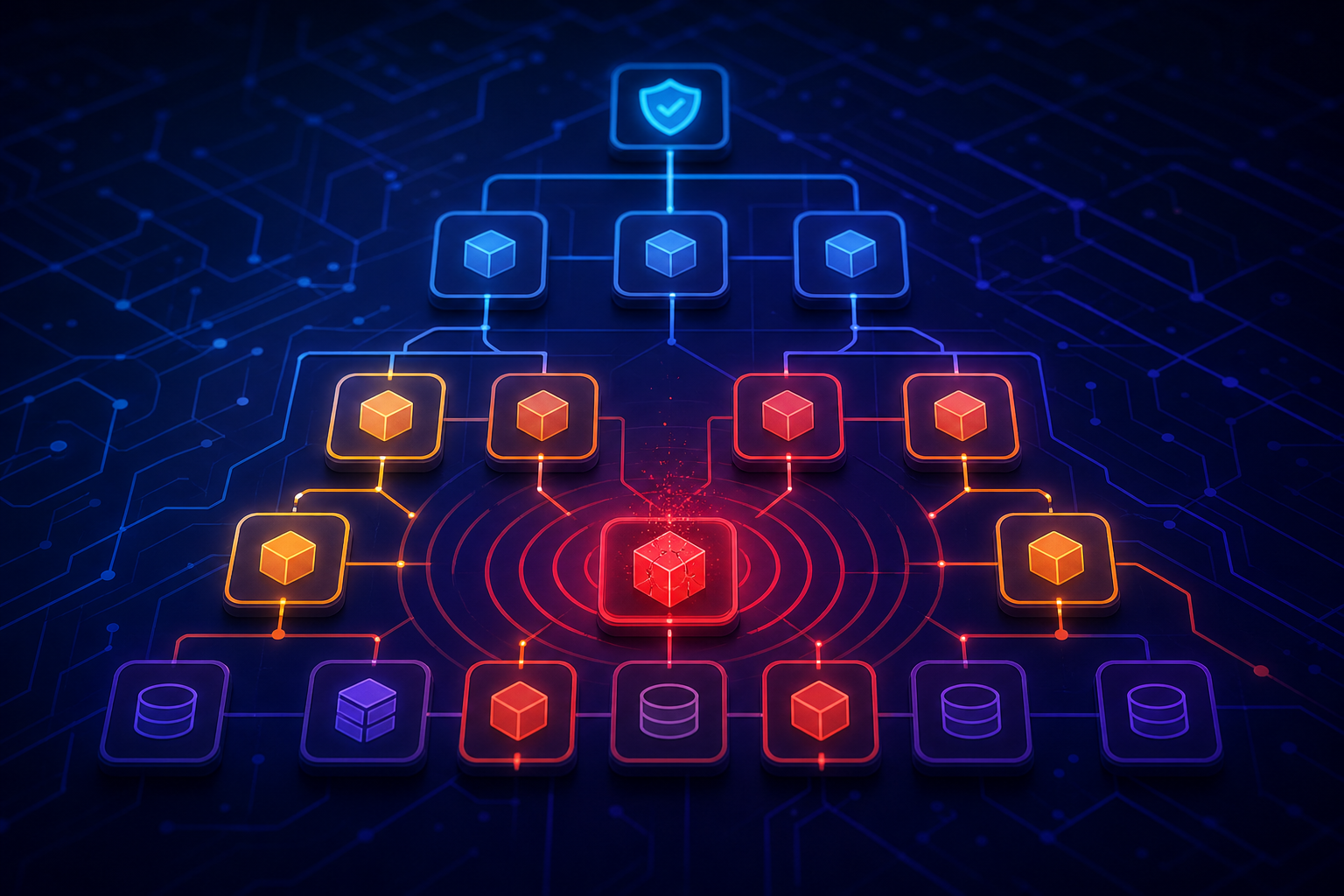
The numbers are hard to dismiss. According to supply chain attack research from AppSec Santa, 63% of organizations experienced a supply chain attack in the past two years (Verizon DBIR 2025, Checkmarx 2024), and 95% of vulnerabilities are found in transitive dependencies, not direct ones (Endor Labs, Sonatype 2024). The library your connector pulls in, and the library that library pulls in, are more likely to be the problem than anything you wrote yourself.
In a SaaS-to-SaaS context, your connector code sits between your product and a customer's live business system. A malicious or vulnerable package in that chain can read credentials in memory, exfiltrate data mid-sync, or silently alter records before they reach their destination.
Ownership is genuinely murky here. Your security team may audit application code without touching connector dependencies. Your integrations team may ship connectors without a formal CVE review process. The result is a gap that belongs to everyone and nobody.
A mature posture covers three things:
- Automated dependency scanning on every connector build, beyond application deploys alone
- A defined SLA for patching critical CVEs in connector dependencies
- Visibility into transitive dependencies, since direct dependency audits miss most of the exposure
Threat 2: OAuth Token Theft and Token Replay
OAuth tokens are the credential attackers want most, and SaaS integrations are where those tokens accumulate. Unlike passwords, a stolen OAuth token bypasses MFA entirely. There is no failed login attempt, no authentication prompt, no audit trail that looks unusual. The token just works, because that is what it was designed to do.
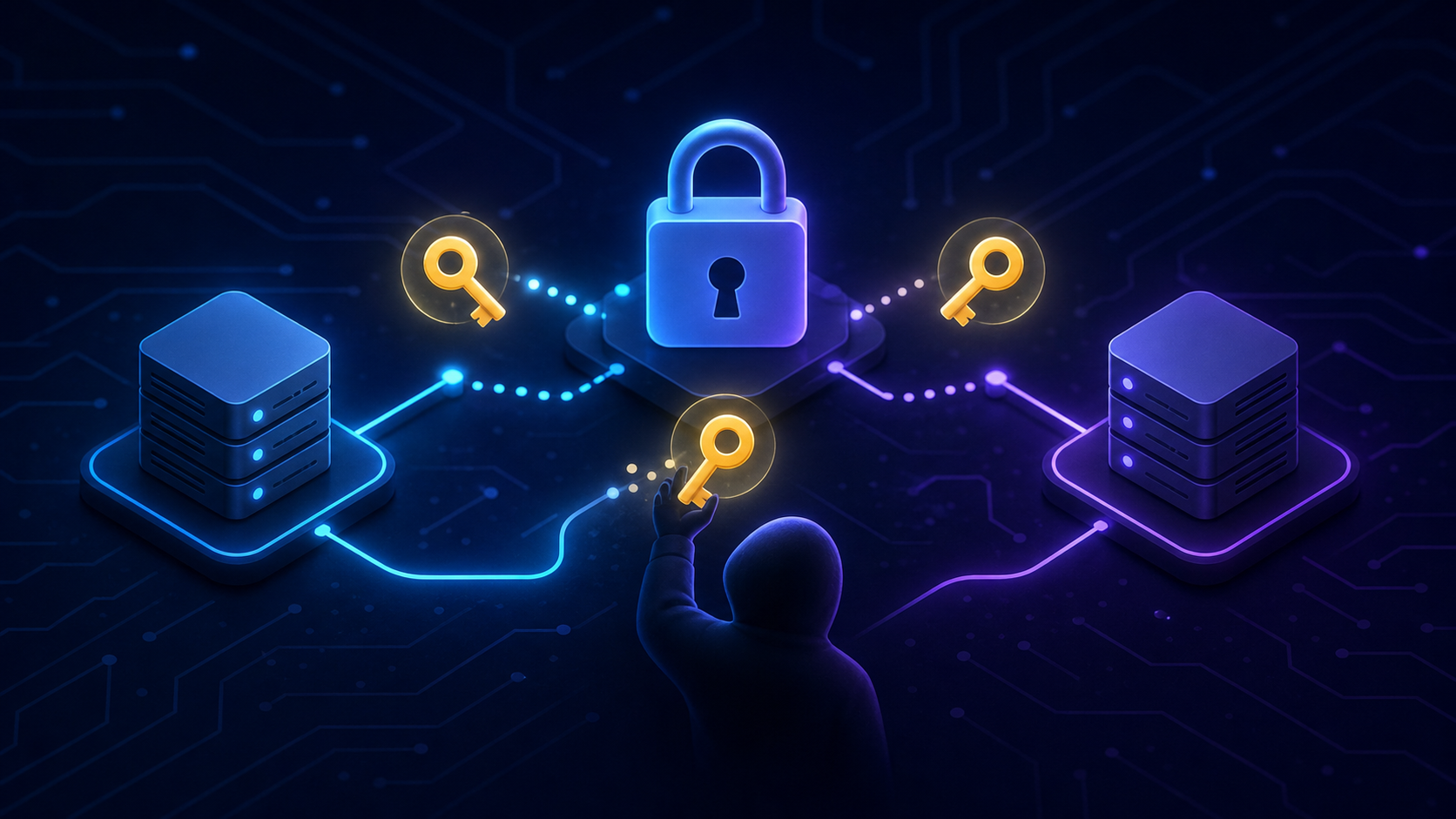
The scale of a single vendor compromise makes this concrete. In the Salesloft Drift breach, stolen OAuth tokens reached 700+ orgs without anyone guessing a password or bypassing a single MFA prompt.
Token replay follows the same logic. An attacker who intercepts a valid token can replay it against the API indefinitely while it stays active. Integrations are especially exposed because they hold long-lived tokens that silently expire issued once during customer OAuth and refreshed automatically in the background. No human re-authenticates. The credential just persists.
Controls that reduce this exposure:
- Enforce short token lifetimes with automatic rotation so a captured token expires before it can be weaponized.
- Audit connected apps regularly and revoke tokens no longer tied to active integrations.
- Scope tokens to the minimum permissions the integration actually requires.
- Log every token use with tenant attribution so anomalous access patterns surface before damage accumulates.
Threat 3: Secrets Leaking Through Logs and Configuration
The OWASP Non-Human Identities Top 10 ranks secret leakage as the #2 risk for machine-to-machine authentication. It sits that high for one reason: once a secret escapes into a log file or config, finding it is genuinely hard.
Integration pipelines create specific leakage points. An API key passed as a query parameter shows up in access logs. A token committed to a config file three sprints ago lives in version history long after anyone remembers it. Each path is mundane. The combined exposure is not.
Controls worth verifying in any integration vendor's security posture:
- Secrets never appear in job logs or error outputs, even during failures
- Credentials are stored encrypted at rest, not in plaintext config files
- API keys and tokens are rotated on a defined schedule, not held indefinitely
- Access to credential stores is scoped by role, with audit logging on reads
Threat 4: Over-Permissioned AI Agents and Integrations
AI agents introduce a permission problem that most SaaS teams are not built to catch yet. When an agent authenticates through an existing OAuth connection, it typically inherits whatever scopes the user originally granted: broad read/write access approved months ago, whether the agent needs any of it or not.
The practical consequence: an agent that only needs to read invoice statuses from QuickBooks may also hold write access to chart of accounts, vendor records, and journal entries. A prompt injection or compromised session means the blast radius is a fully authenticated write session, not a contained read operation.
Least privilege applied to agent integrations means the agent's credential scope is defined by what that agent session needs to do, not by what the connecting user is allowed to do. Those are rarely the same thing.
What over-permissioned agent access looks like in practice:
- An agent session reusing a long-lived OAuth token originally granted for a human-facing sync
- Tool lists that expose all available API operations instead of a scoped subset
- No per-session credential that expires when the agent task completes
- Tenant data accessible across agent sessions because tokens are shared instead of scoped per tenant
A least-privilege credential model contains this. Each tenant gets its own auth context, agent sessions get short-lived tokens instead of inheriting persistent ones, and the tool surface exposed to the agent is limited to what that specific workflow requires.
Who Owns Integration Security in a B2B SaaS Company
Accountability gaps show up most painfully during vendor security reviews, when someone from procurement sends a 40-question questionnaire and three internal teams all assume someone else is handling it.
Integration security responsibility splits across three distinct layers:
- Your integration vendor: encryption in transit, credential storage, and dependency patching inside connectors
- Your product and engineering team: OAuth scope selection, token rotation, tenant isolation, and audit logging
- Your customer: which third-party apps they authorize and whether they revoke stale tokens
In short: the vendor owns the pipe, your team owns how you configure it, and the customer owns what they plug into it.
Where this breaks down: product teams request the broadest OAuth scopes during initial setup because asking for more feels safer, then never revisit those scopes after launch. Engineering marks secrets management as a devops concern. The customer's IT team has no visibility into tokens granted on their behalf by your product.
CPOs and Heads of Partnerships typically end up answering for all three layers in a security questionnaire, even though they directly control only one. That gap gets especially tricky once MCP authentication for AI agents enters the picture. The cleaner move is to know what your integration vendor's SOC 2 report actually covers, document your own configuration choices, and have a clear answer ready for what falls outside your control.
SaaS Integration Security Best Practices
A checklist beats a lecture, so here is what good actually looks like across each control area.
Credential Scoping
Request only the OAuth scopes your integration uses at runtime. Broad scopes granted for convenience become attack surface. If your sync reads invoices, the token scope should cover invoices, nothing beyond that.
Tenant Isolation
Each customer's credentials and data should never touch another tenant's context. Per-tenant tokens, per-tenant job execution, and no shared credential stores across tenants.
Secrets Hygiene
- No secrets in job logs, error outputs, or query parameters
- Credentials encrypted at rest, never in plaintext config
- Rotation on a defined schedule, not indefinitely persistent
- Role-scoped access to credential stores with read audit logs
Dependency Patching
Scan connector dependencies on every build. Set a defined SLA for critical CVEs, ideally under 72 hours. Direct dependency audits alone miss most exposure, which matters even more as teams build AI-ready integrations that depend on the same connector code.
Integration Lifecycle Governance
Revoke tokens tied to inactive integrations. When a customer churns or disconnects, the token should die with the session, not persist in a credential store waiting to be forgotten.
How to Answer the Integration Security Questions in a Vendor Review
Nobody enjoys a 400-row security questionnaire. Here is what to have ready when one lands in your inbox.
| Questionnaire Category | What They're Actually Asking | The Answer a Mature Posture Supports |
|---|---|---|
| Data retention | Does your integration layer store customer data? | Customer data is processed and delivered directly, not stored between syncs. |
| Credential handling | How are third-party API credentials stored? | Encrypted at rest, never in plaintext config or job logs, with role-scoped access and audit logging on reads. |
| Access scoping | What OAuth permissions does your integration request? | Minimum scopes required per sync, reviewed at connector build time, not set once and forgotten. |
| Tenant isolation | Can one customer's data touch another's? | Per-tenant tokens and per-tenant job execution. No shared credential stores across tenants. |
| Incident response | What happens when a connected vendor is breached? | Token revocation workflow, affected tenant identification, defined notification SLA. |
| Compliance certifications | SOC 2? GDPR? | A vendor's SOC 2 report covers that vendor's infrastructure. Your configuration choices are documented separately. |
| Third-party dependency risk | How are connector dependencies audited? | Automated scanning on every build, defined SLA for critical CVEs, transitive dependency coverage. |
The pattern that trips up most teams is assuming the vendor's SOC 2 report answers everything. It covers the pipe. Your configuration choices, the scopes you requested, the tokens you never rotated, the offboarding workflow you haven't written yet: those are yours to document. Know the boundary before the questionnaire arrives.
How hotglue Approaches Integration Security Across 38,000+ Active Tenants
At hotglue, we process roughly 10 billion records weekly across 38,000+ active tenants on AWS ECS via Fargate. The architectural choice that matters most for security questionnaires: we never store customer data between syncs. Data is processed and delivered directly, supporting live data access for AI agents without the retained-payload risk that comes with caching it.
A few specific practices that map to the threats covered above:
- Same-day patching of vulnerabilities in our internal tools and dependencies, with certificate and dependency sweeps across connector builds and merges gated on passing checks
- The widget can be configured with a JWT signed RS256 that carries tenant and scopes claims, and a dashboard setting can require tenant requests to present one. Full details in the authentication docs
- Role-based API keys (secret, public, and personal) with different permissions
- Secrets removed from job logs as an active engineering practice, and sensitive fields dropped from connector output when the connection lacks the required scope
- Open-source connectors that customers can inspect, removing the black-box dependency risk that makes supply chain audits painful with other providers
- GluestickAI's transformation layer, where customer data is never stored or used to train the underlying model
If you have a vendor review coming up, the auth docs are a good starting point and our team is available to go deeper from there.
Final Thoughts on Integration Security for B2B SaaS Teams
The threats covered here, from supply chain vulnerabilities to over-permissioned agent sessions, all share one thing: they live in the space between systems, where ownership is easy to avoid claiming. Your team controls more of that space than most people want to admit. Getting clear on what you own, documenting your configuration choices, and running the right controls before a security review forces the question puts you in a much better position. Book a demo with hotglue if you want to see how these practices come together in practice.