Picking the wrong pricing model for your embedded integrations doesn't hurt right away. It hurts when you're at 300 connected customers and your integration costs are growing faster than the revenue they support. We compared how Hotglue, Prismatic, Paragon, and Nango price their embedded iPaaS so you can see which model actually scales with your business before you're locked in.
TL;DR: Hotglue's per-active-tenant billing is the only model here that stays predictable as you scale — no per-volume surprises, no custom quote required, and no awkward finance team conversations.
What Is Embedded Integration Pricing?
Embedded iPaaS vendors charge you in one of two ways, and the difference compounds fast as you grow.
Per-tenant pricing bills you based on the number of your customers who have an active integration connected. Add a new customer to your Salesforce connector? That's one more tenant. The bill is predictable because it scales with your customer count, not with how much data those customers move.
Per-volume pricing ties your bill to data throughput: API calls made, records synced, or gigabytes transferred. Light users cost less, but a single customer running large historical syncs or a busy QuickBooks connector pulling nightly can spike your costs without warning. (Your finance team will have questions about this. They will not find it as interesting as you do.)
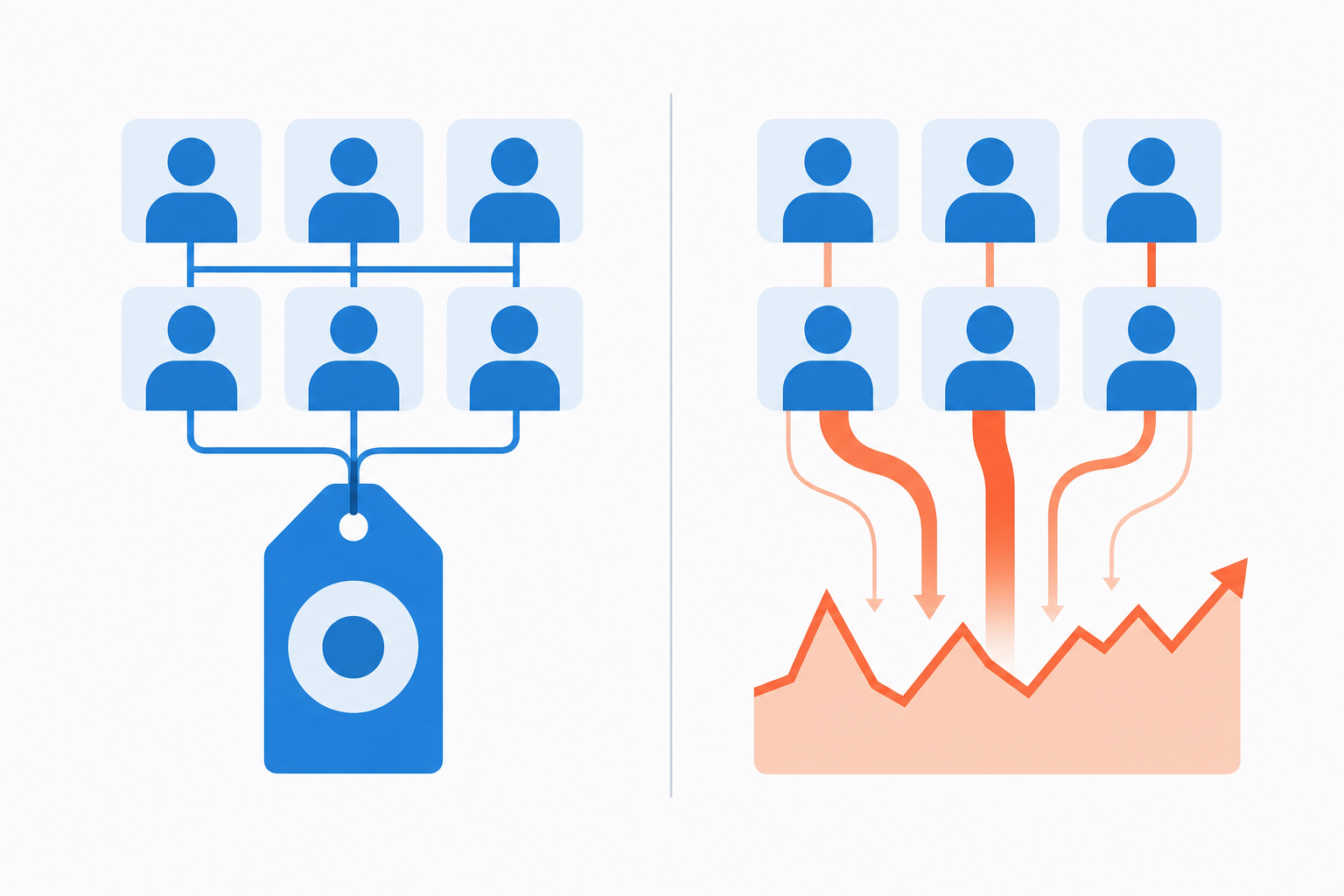
For a CPO or Head of Partnerships, this distinction shapes more than just the finance team's monthly headache. Per-volume models make it genuinely hard to quote embedded iPaaS costs to prospects, structure partner contracts, or forecast gross margin at scale. Per-tenant models let you build a clean cost-per-customer line into your pricing spreadsheet. One model rewards growth; the other quietly penalizes it.
How We Ranked These Integration Pricing Models
We reviewed each vendor across six criteria, all sourced from public documentation, pricing pages, and third-party reviews.
- Pricing transparency: can you calculate your bill before talking to sales?
- Cost behavior at scale: what happens to your unit economics when you go from 50 to 500 connected customers?
- Commercial model flexibility: does the vendor support reseller, white-label, or referral arrangements, or just a single buyer structure?
- Connector depth and openness: are connectors open-source and extensible, or locked in a black box?
- Time-to-first-connector: how quickly can a new integration go live from a standing start?
- Data handling: does the vendor store your customers' data, or process and deliver it?
Each of these maps to a real decision a CPO or Head of Partnerships faces. Pricing transparency affects how you quote integrations to prospects. Cost behavior at scale determines whether your integration layer becomes a margin problem at Series B. Commercial flexibility controls whether partners can resell or bundle your integrations cleanly. The rest affect your engineering team's autonomy and your customers' trust. In practice, the CPO or Head of Partnerships owns the vendor decision and the commercial structure, while engineering owns the day-to-day connector maintenance, which is exactly why pricing model clarity matters to both groups.
Best Overall Embedded iPaaS: hotglue
Hotglue's per-active-tenant billing is the core reason it lands at the top of this list. You pay for customers who synced data in the last 30 days, nothing more. A tenant who runs one sync in late January and one in early February counts once, not twice. That rolling window design means your bill tracks your active customer base, not calendar accidents.
Here is what you get out of the box:
- 650+ open-source connectors with Singer/Airbyte compatibility, full codebase visibility, and on-prem coverage for tools like QuickBooks Desktop and Sage 300 CRE that most competitors skip entirely
- A Python transformation layer with GluestickAI, cron scheduling per connector, and webhook callbacks included at no extra cost
- SOC 2 Type II and GDPR compliance, with data processed and delivered but never stored
- White-label deployments, Magic Links, and reseller/referral commercial structures without lock-in
- 38,000+ active tenants with roughly 10 billion records processed weekly
- Dedicated Slack support per customer, no ticketing queues: a key factor in stopping renewals lost to integration backlogs
"Bottom line: per-tenant pricing means your integration costs grow with your customer count, not against it."
Paragon
Paragon targets developer-led SaaS teams who want a managed, widget-based integration layer without writing connector infrastructure from scratch. The pitch is clean: prebuilt connectors across CRM, HRIS, and accounting categories, an SDK for workflow configuration, and embedded UI components your end users authenticate through. Paragon has also repositioned toward AI-native use cases, adding RAG ingestion and agent tool calling to go after teams building on top of LLMs.
What They Offer
- Prebuilt connector library covering common SaaS categories
- SDK and workflow builder for integration logic assembly
- Embedded UI components for end-user connection flows
- RAG ingestion and AI agent tool calling for AI-native products
The problem shows up in the contract. According to a 2026 Albato comparison, Paragon's pricing is usage-based per connected user and requires a sales quote, with costs reaching $500 to $3,000+/month depending on your customer base and no published ceiling. That makes unit economics hard to defend once your customer count grows past a few dozen, and it ranks among the key iPaaS evaluation pitfalls for product managers. Hotglue's per-active-tenant model carries no per-usage surcharges, so the math stays clean as you scale.
Prismatic
Prismatic is built for engineering teams that want to own every layer of their integration stack. The TypeScript SDK gives developers full code-level control, the visual builder covers simpler logic, and the multi-tenant deployment model lets you build a component once and push it across your entire customer base.
What They Offer
- TypeScript SDK and low-code workflow builder for integration logic
- Multi-tenant "build once, deploy to many" deployment framework
- CI/CD pipeline support and custom component framework
- Integration marketplace for end-customer self-service
Good for teams with dedicated integration engineers who are comfortable in TypeScript and want to build, own, and version their connectors like any other internal service.
The catch is pricing. Prismatic's billing is custom and usage-based; per the viaSocket comparison, the final bill depends on usage patterns you can't easily predict upfront. That makes it genuinely hard to model your integration cost line at contract time, let alone explain it to a finance team mid-year. Hotglue's per-active-tenant billing, open-source Python connectors, and hands-on support cover most of what Prismatic offers (see the full hotglue vs Prismatic iPaaS breakdown) without requiring a TypeScript-fluent integration team to keep it running.
Nango
Nango is an open-source integration runtime built for developer teams who want to handle OAuth, API syncing, and integration scripting inside their own codebase. The positioning is code-first by design: you write TypeScript integration scripts, Nango handles the auth plumbing, and you can self-host the whole thing if you prefer.
What They Offer
- Open-source runtime for OAuth management and API syncing
- TypeScript-based integration scripting with self-hosted or cloud options
- Prebuilt integration templates for common SaaS providers
- Free tier available for early-stage evaluation
Good for developer-first teams that want an open-source foundation and are comfortable owning what comes next. The free tier makes it easy to test the platform without a sales call, which is genuinely useful early on.
The limitation is what happens six months later. As Truto's 2026 Nango alternatives guide notes, teams migrating away from Nango typically cite customization depth and maintenance overhead as the breaking points. The self-hosted path moves connector maintenance, uptime, and troubleshooting squarely onto your engineering team. That's a reasonable trade at 10 customers. At 200, it's a full-time job, which is exactly why engineers dread in-house integrations, and it competes with your roadmap.
Hotglue's managed infrastructure, 650+ open-source connectors, and dedicated per-customer Slack support replace that maintenance burden without requiring you to give up code-level control.
Feature Comparison Table of Embedded Integration Pricing Models
| Feature | Hotglue | Paragon | Prismatic | Nango |
|---|---|---|---|---|
| Pricing Model | Per active tenant | Per tenant + usage fees | Custom usage-based | Per connection |
| Pricing Transparency | Yes | No (custom quote) | No (custom quote) | Partial (free tier only) |
| Open-Source Connectors | Yes (650+) | No | No | Partial (templates only) |
| On-Prem Connector Support | Yes | No | No | No |
| Code-Level Conversions | Python | No | TypeScript SDK | TypeScript |
| White-Label Deployment | Yes | Yes | Yes | No |
| SOC 2 Type II | Yes | Yes | Yes | Yes |
| Dedicated Support Channel | Yes (per-customer Slack) | No | No | No |
| Free Tier Available | No (startup plan available) | No | No (free trial only) | Yes |
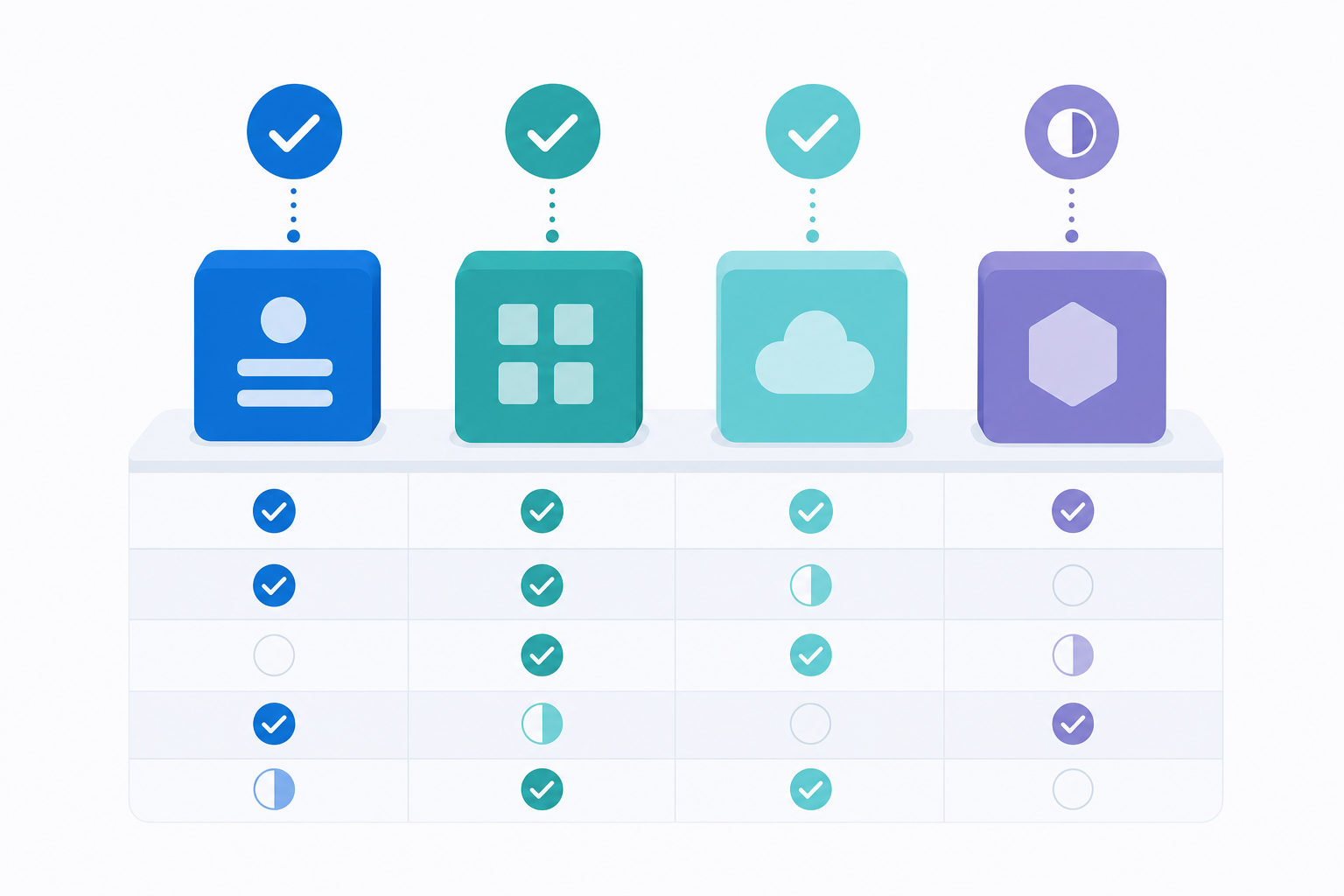
A few things worth calling out here. Hotglue's per-active-tenant model means you only pay for customers who actually run integrations, not every account you've ever provisioned. Paragon layers usage fees on top of per-tenant pricing, which can make forecasting tricky as your customer base scales. Prismatic and Nango both rely on custom or connection-based pricing, a pattern common across many iPaaS integration platforms, where the final number depends heavily on your specific usage patterns.
Why hotglue Is the Best Embedded iPaaS for Pricing Predictability
Per-tenant pricing with a rolling 30-day active window means your integration costs follow your real business activity. Customers who sync infrequently or who churn stop billing you, and customers who run heavy historical syncs don't inflate your costs beyond the flat per-tenant fee, which is a key reason teams look at Workato alternatives for B2B SaaS.
Hotglue pairs that pricing structure with compliance-first data handling (processed and delivered, never stored). If you're a CPO or Head of Partnerships who needs to quote integration costs to prospects, explain gross margin to your finance team, or hand a clean reseller contract to a partner and you're comparing Workato alternatives for SaaS embedding, hotglue is the integration layer that keeps the math simple at every stage of growth.
Final Thoughts on Per-Tenant vs Per-Volume Integration Pricing
Your pricing model is a business decision, and a technical one. Per-volume billing can surprise you when a single customer kicks off a large sync; per-tenant stays flat and predictable regardless of data throughput. Book a demo with hotglue to see how the per-active-tenant model fits your current customer base and where it goes from there.
FAQ
How do I choose between Hotglue, Paragon, Prismatic, and Nango if my team doesn't have dedicated integration engineers?
If you don't have TypeScript-fluent engineers who can own connector infrastructure, Prismatic and Nango both require more in-house build and maintenance capacity than most product teams can spare. Paragon's managed approach reduces that burden but layers usage fees on top of a high base cost. Hotglue's managed infrastructure, Python transformation layer, and per-customer Slack support give non-specialist teams code-level control without requiring a dedicated integration engineering hire.
Is Hotglue or Nango a better fit for a B2B SaaS company scaling past 100 connected customers?
Nango's self-hosted model works well at small scale, but connector maintenance, uptime, and troubleshooting land on your engineering team as you grow. At 100-plus customers, that becomes a real roadmap tax. Hotglue's managed infrastructure processes roughly 10 billion records weekly across 38,000+ active tenants, so the infrastructure weight stays off your team regardless of how fast your customer base grows.
When should I pick per-tenant pricing over per-volume pricing for embedded integrations?
Per-tenant pricing is the right call when you need to quote integration costs to prospects, model gross margin at scale, or build clean cost-per-customer lines into partner contracts. Per-volume models create unpredictable spikes whenever a customer runs a large historical sync or connects a high-frequency source like QuickBooks nightly, making those finance conversations genuinely painful.
Is Paragon's pricing model sustainable once you scale past a few dozen connected customers?
See the Paragon section above for the pricing breakdown. The combination of a premium base and variable usage fees is a difficult line item to defend at a finance review, especially compared to Hotglue's flat per-active-tenant structure where a single tenant connecting multiple connectors counts as one billable unit.
How do I assess whether an embedded iPaaS vendor's connector library will actually cover my integration needs?
Look for three things: total connector count, open-source access to the connector code, and on-premise support for legacy systems. A large connector library with black-box code gives you no visibility into what the connector actually does or how to extend it. Hotglue's 650+ connectors are fully open-source with Singer and Airbyte compatibility, and include on-prem coverage for tools like QuickBooks Desktop and Sage 300 CRE that most vendors skip entirely, which matters if your customers run accounting or ERP software that never moved to the cloud.